What Has Changed Since Their First Visit
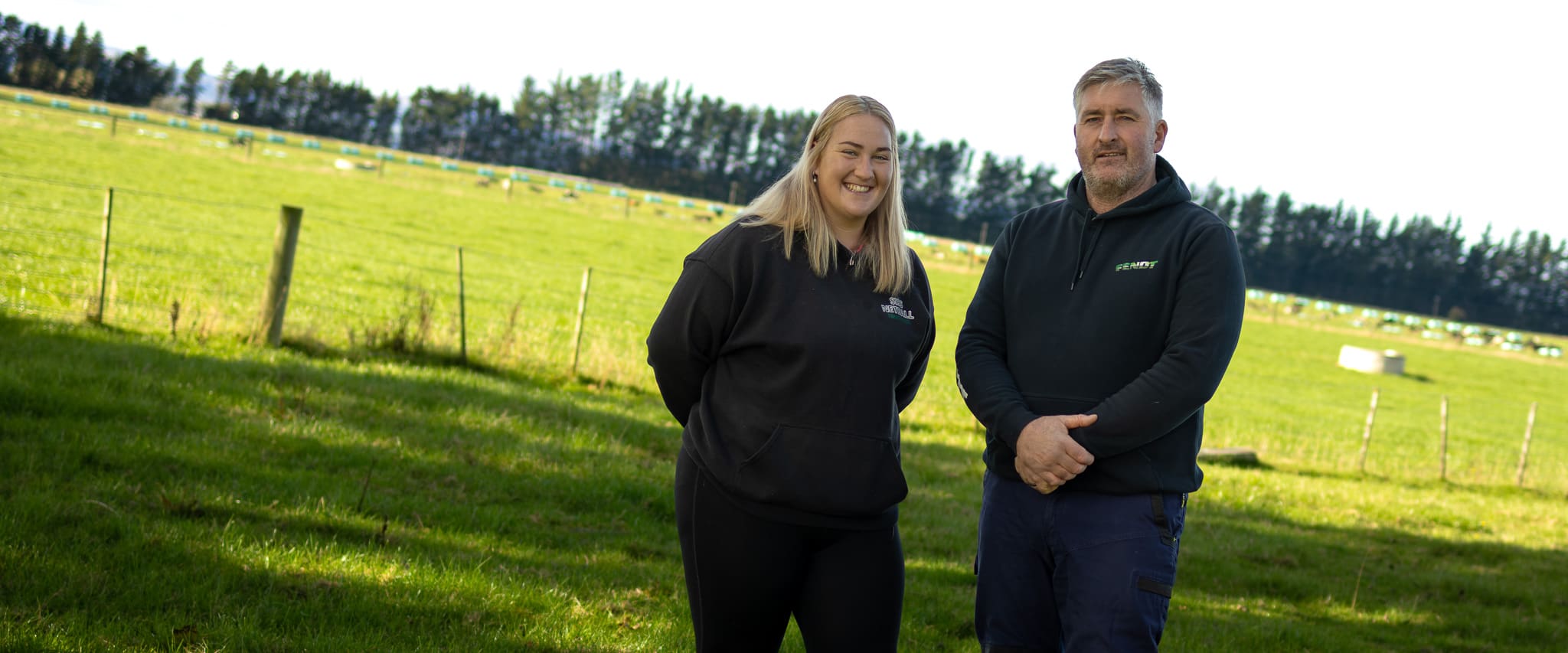
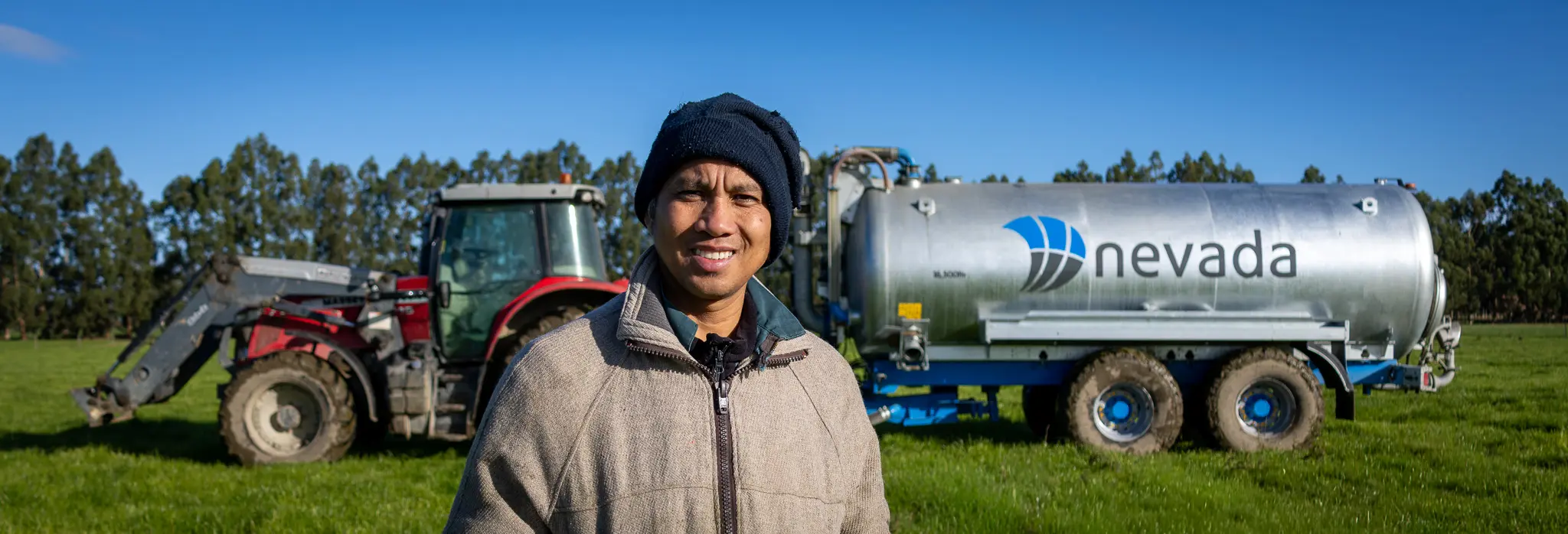
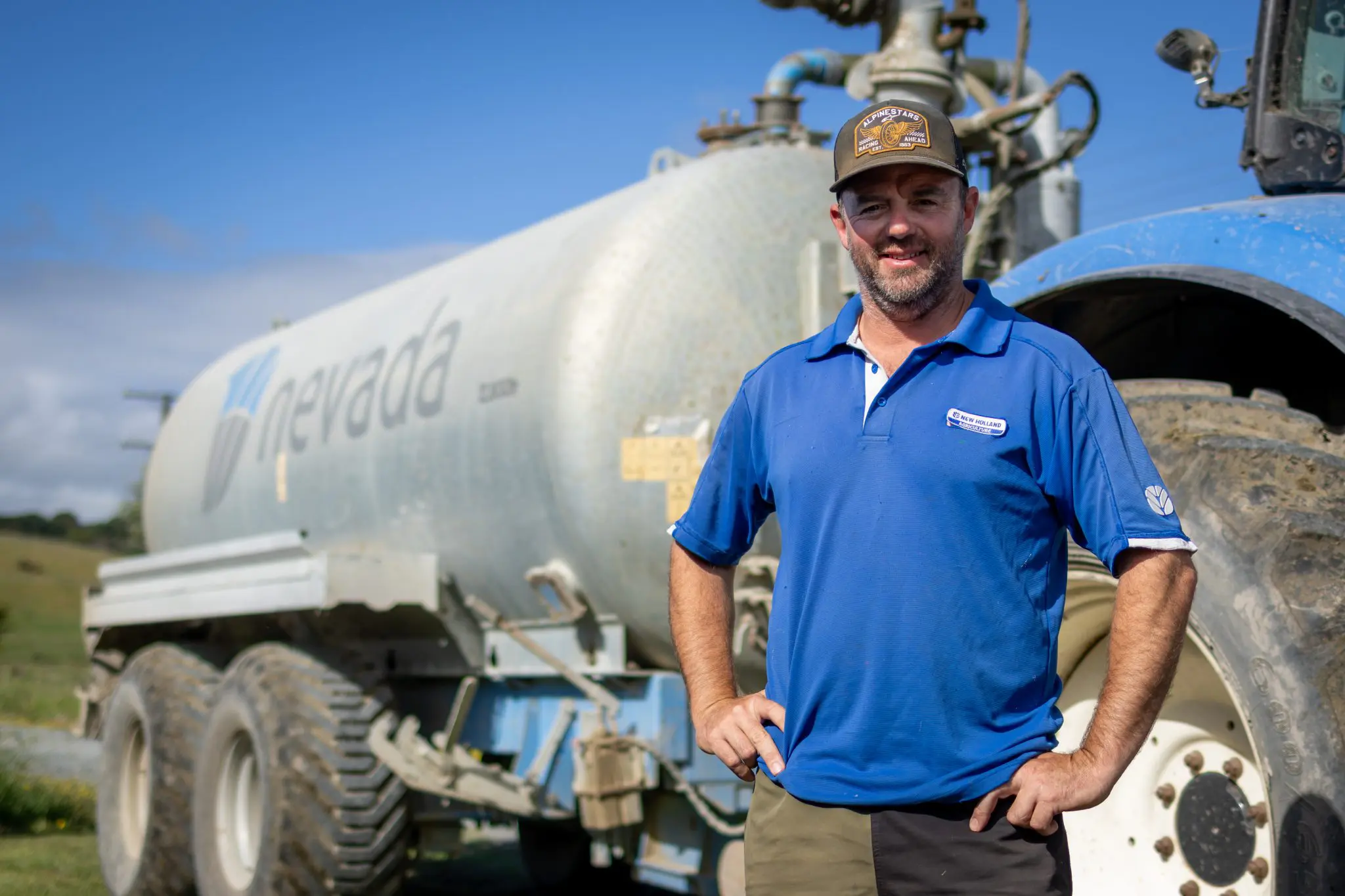
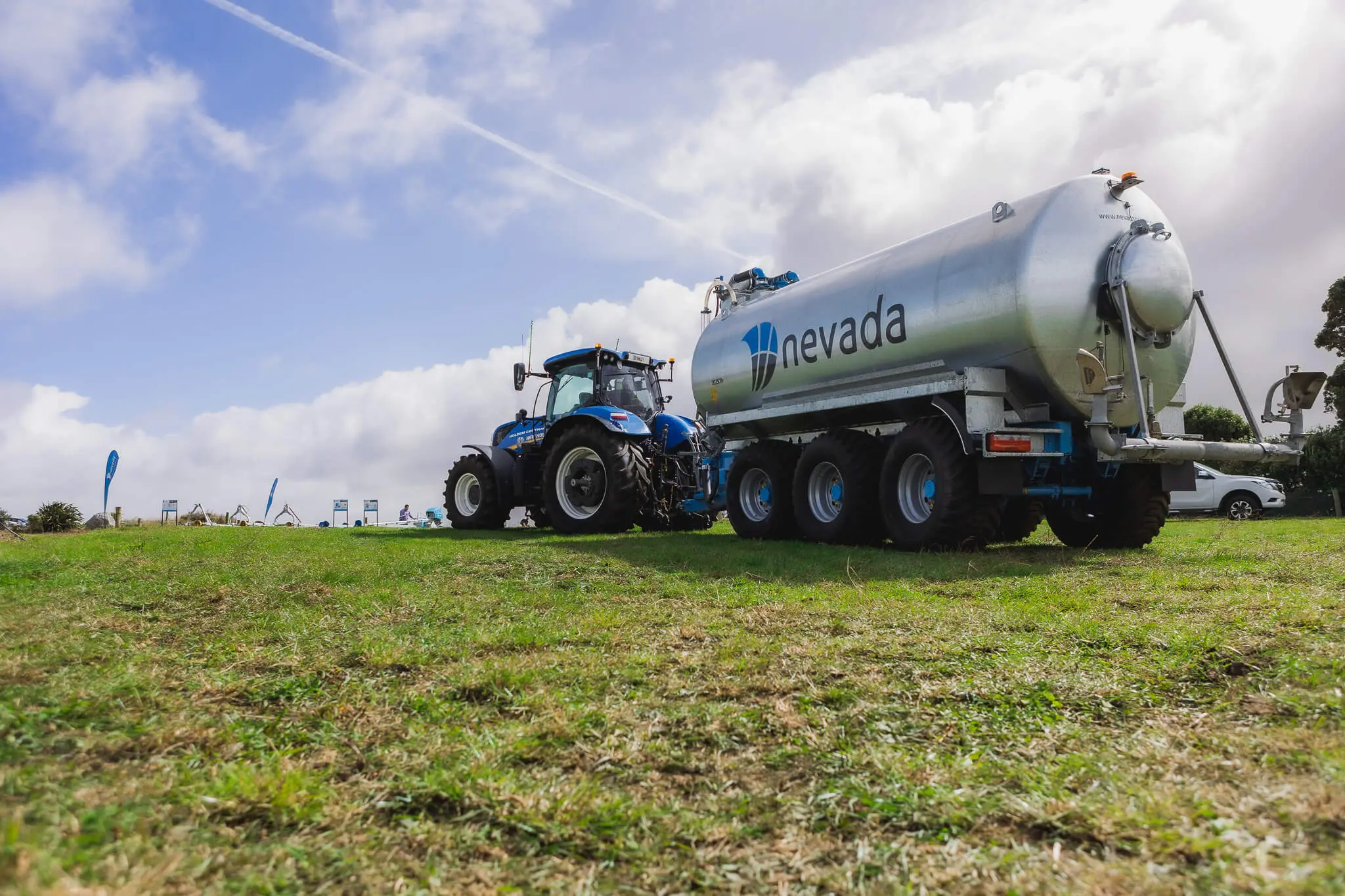
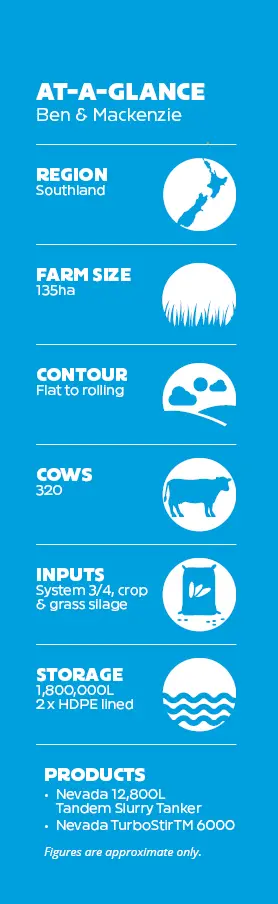
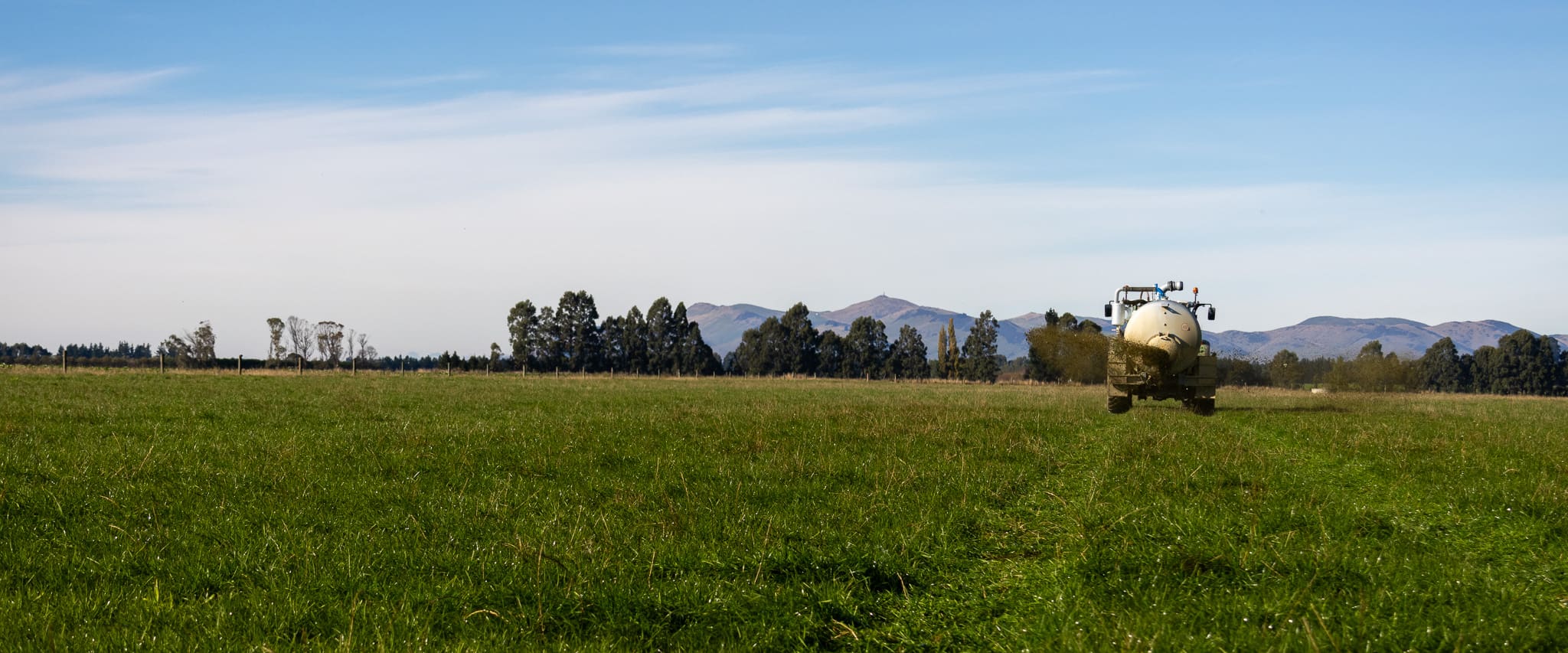
When Nevada first visited Ben and Mackenzie in June 2024, the 12,800L Tandem Axle Slurry Tanker and PTO TurboStir 6000 stirrer were still new additions to their dairy effluent system.
Their original ON FARM story explained why they replaced a hard-hose cannon system that could reach only 70 hectares. It recorded the early gains in spreading capacity and their plans to move more of the nutrients settled in the pond back onto the farm.
When Nevada returned in April 2026, both had seen enough to judge whether the change had worked.
“We purchased in May 2024 and it has completed over 1,000 loads,” says Ben.
Pasture Growth Gave Them Confidence to Cut Nitrogen
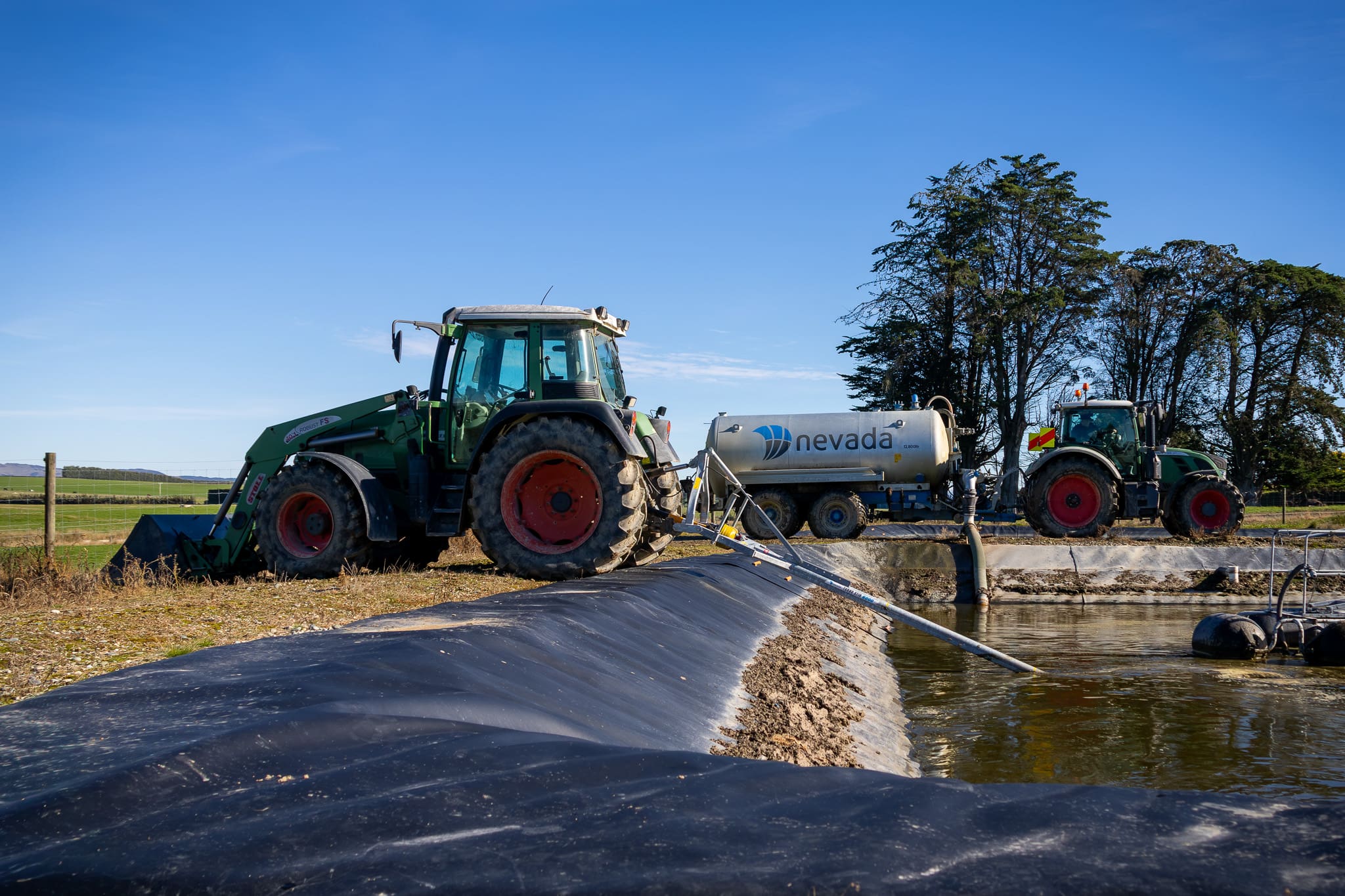
The decision to reduce synthetic nitrogen followed what Ben and Mackenzie could see in the paddocks after their dairy effluent applications. “The growth rates that we were seeing behind the effluent applications with the tanker gave me the confidence to pull back on the nitrogen inputs and saved us a heap of cash flow,” says Ben. That gave them enough confidence to remove two complete rounds of synthetic nitrogen fertiliser. In that same season, Ben says the farm produced 10,000 kg more milk solids. For Mackenzie, that represents a change in how they view the job. They are no longer simply moving slurry; they are returning nutrients to the farm.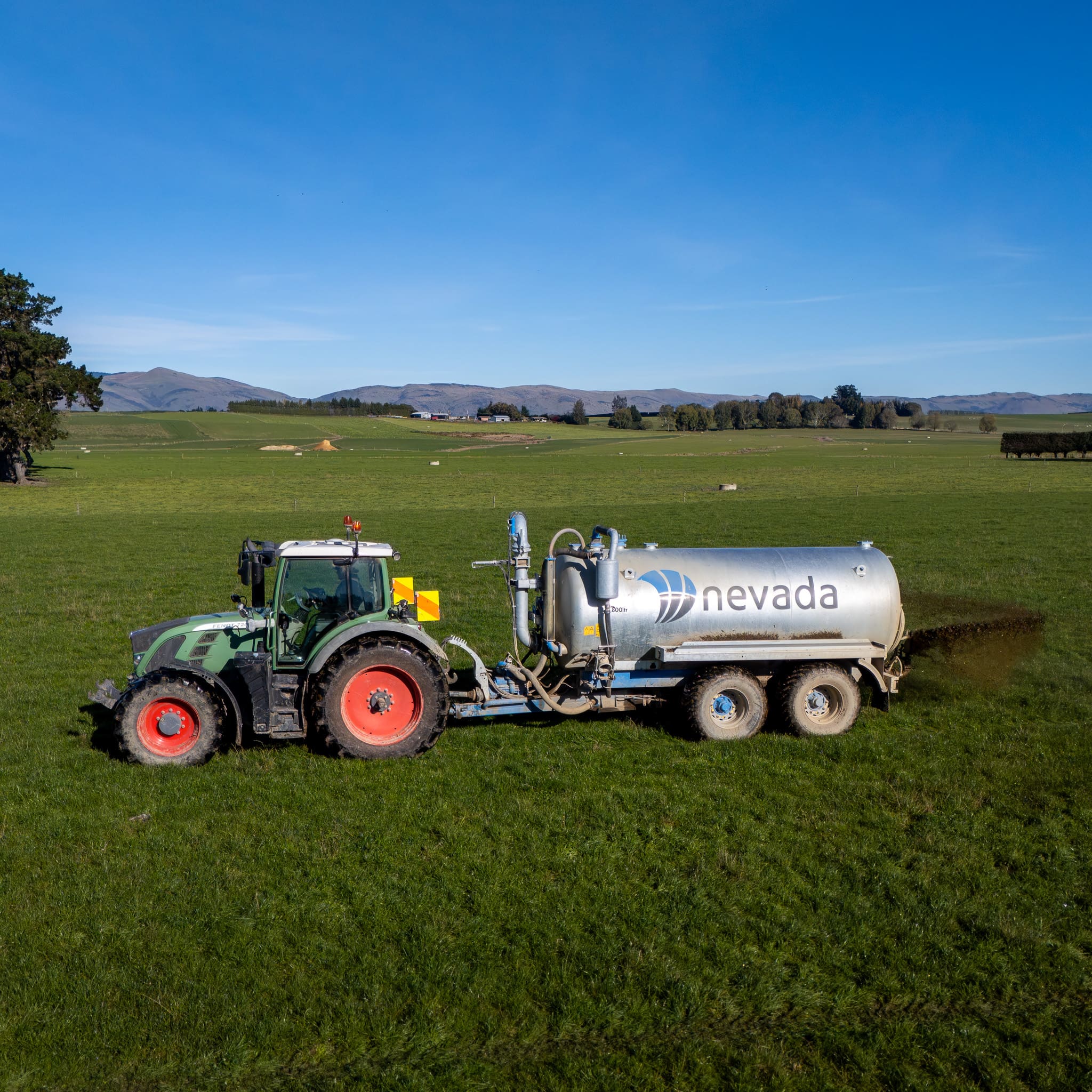
A Consistent Mix and a Measured Application
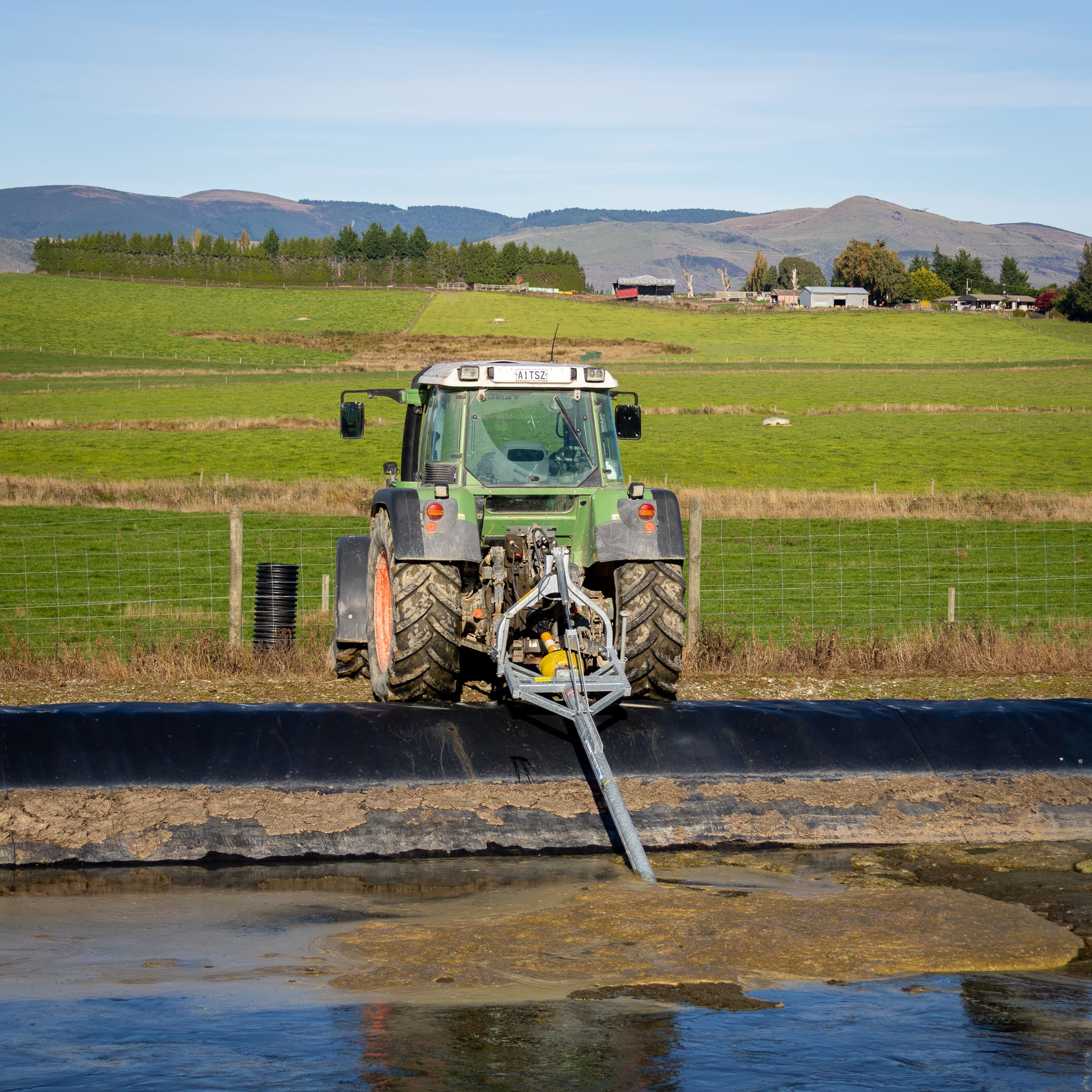
Consistent spreading starts before the tanker is filled. “The role of the stirrer is really important to get a consistent spread across all the paddocks on the farm,” says Mackenzie. Once mixed, Ben and Mackenzie apply around 36,000 to 38,000 L/ha, which they describe as roughly 4 mm of effluent. Travelling at approximately 3 km/h suits their paddock size and gives them the application rate they are looking for. Ben says fuel use of approximately 9.5 L an hour works well economically for the amount of effluent they can spread.Nutrient Testing Put Numbers Behind the Effluent
Nutrient test results received around the time of the follow-up gave Ben and Mackenzie a clearer picture of what each application was returning to the soil. At their chosen application rate, the results indicated approximately 32 kg/ha of nitrogen, 4 kg/ha of phosphorus and 15 kg/ha of potash. Those figures are specific to their effluent and application rate, but they put real numbers behind the pasture response Ben had already observed. They also support Ben and Mackenzie’s view of the pond contents as a nutrient resource rather than simply something to dispose of.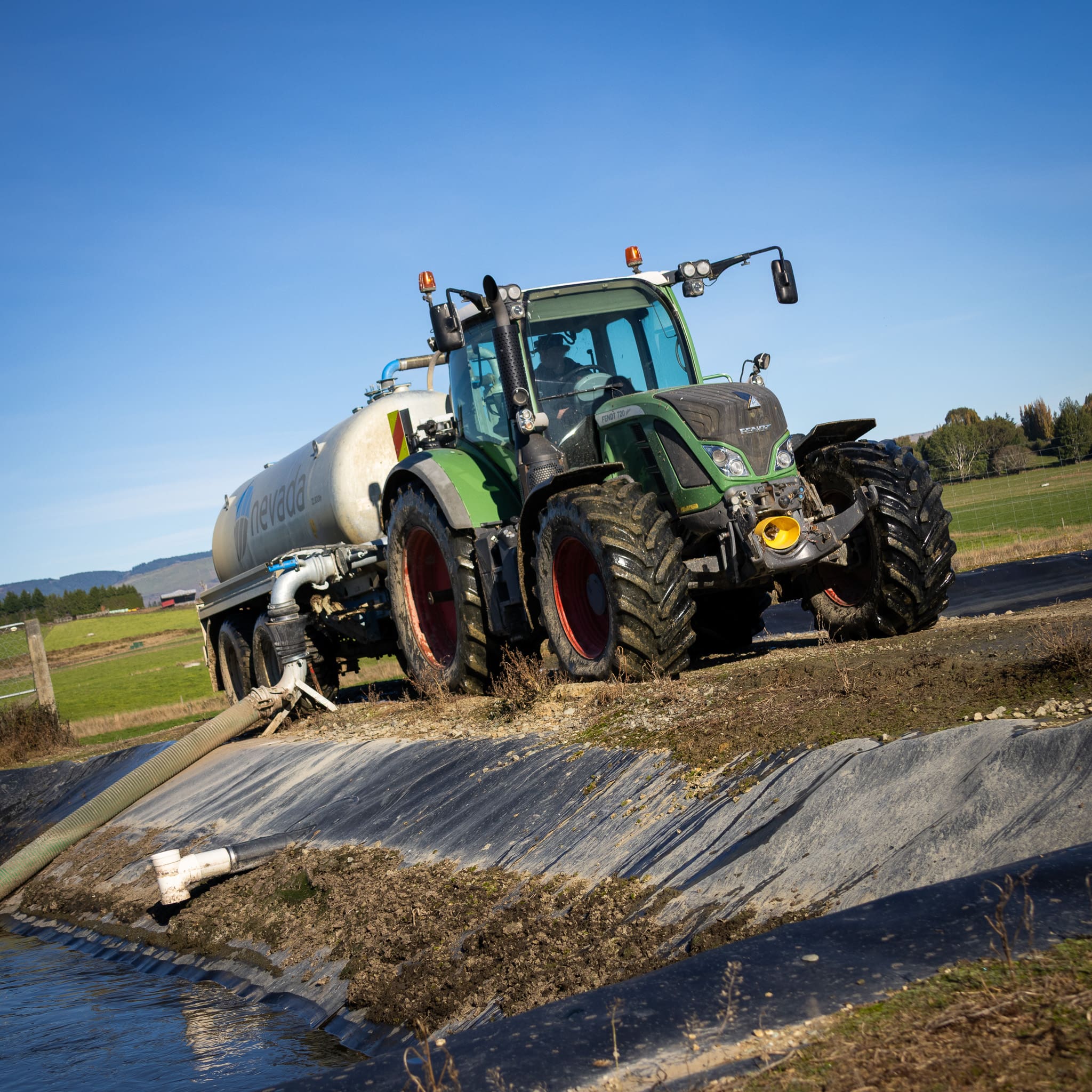
Three Full-Farm Effluent Rounds Each Year
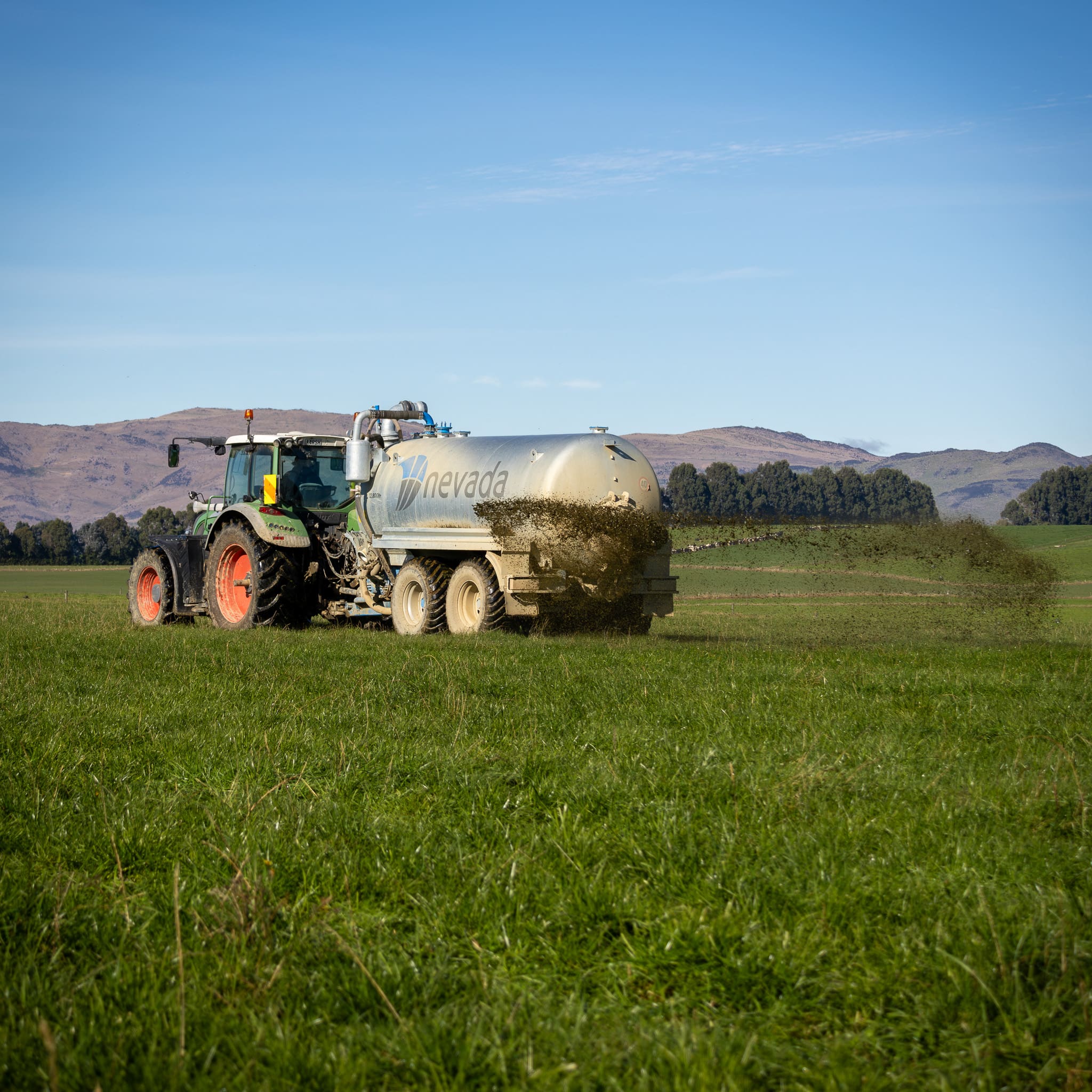
Mackenzie says that with 320 cows at peak, they now complete three full rounds of the farm with effluent each year. That spreads the available nutrients across the farm rather than repeatedly concentrating them within the reach of the old irrigation system. In an eight-hour period, Ben says the tanker can apply approximately three times the volume they could manage with their previous system. That capacity is what makes three full-farm effluent rounds each year practical.Effluent Spreading That Fits Around the Farm
Despite the number of loads completed, effluent spreading does not dominate their working calendar. Ben estimates it takes approximately 120 hours across the season. From September through to May, that works out at around 12 to 15 hours each month. More importantly, the tanker gives them the flexibility to complete the work when conditions and the rest of the farm schedule suit.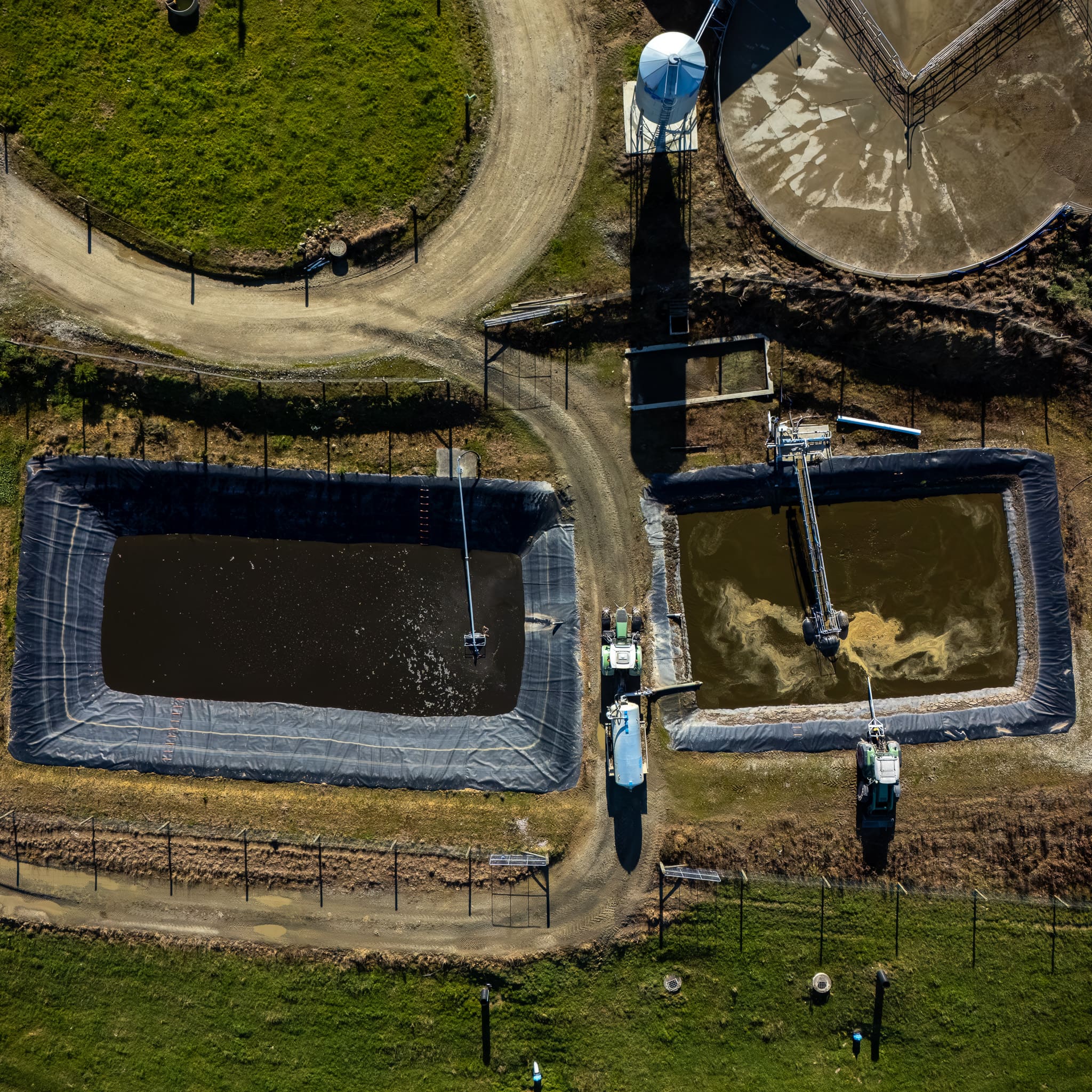
“Effluent spreading doesn’t dominate our time schedule,” says Ben. “We can do it when we choose.”
Greater Confidence Around Compliance
The tanker and stirrer also support the way Ben and Mackenzie manage dairy effluent compliance. Mackenzie says the system has given them confidence to stay compliant with Environment Southland.
Ben describes the assessor arriving, giving the farm a “green tick” and leaving them ready to carry on without the longer inspection normally required.
They are now working towards eligibility for the Environment Southland Dairy Top Performer Programme, which recognises farms that have achieved five years of full compliance across their resource consents. Farmers accepted into the programme move from routine monitoring to self-monitoring, while a proportion are still selected for random quality-assurance visits.
For Ben and Mackenzie, working towards that recognition is another sign that their effluent system is supporting the wider goals of the farm.
No Going Back
Two seasons on, this is no longer a story about new equipment. It is about an effluent system that has become part of how Ben and Mackenzie manage nutrients, time and compliance across the farm.
“There’s no way we could see ourselves going back to the old system,” says Mackenzie. “Having the tanker and stirrer, it’s been a game changer and saved a lot of headaches.”
Ben sums it up in two words: “Job done.”