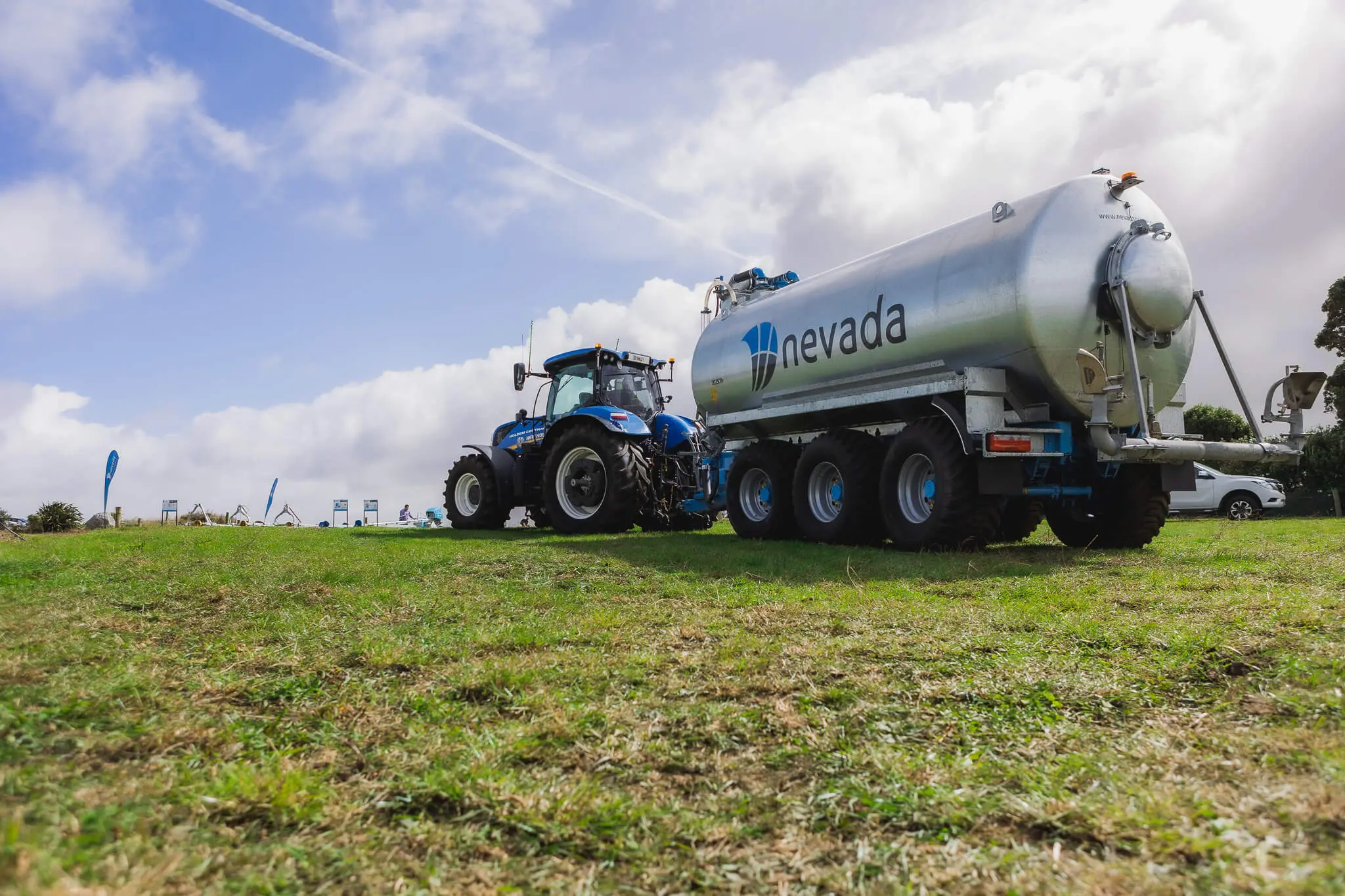
Closed Effluent Storage Solution
If you are in a high rainfall area, this is a bit of a no-brainer. An open pond is a large catchment area, if you can close that off, you will reduce your storage needs. With a bladder tank, there is no chance of overflows from heavy rain, and your effluent will not be diluted from rainwater, so you can reduce your storage capacity.
Bladder tanks are also very popular in areas with a high-water table when it is difficult to dig an effluent pond. Soil type also plays a role because that affects your drainage, which directly affects your ability to irrigate. If you need to wait longer for the ground to dry out, you might need more storage, and that is when a bladder tank comes in handy.
Location, location, location
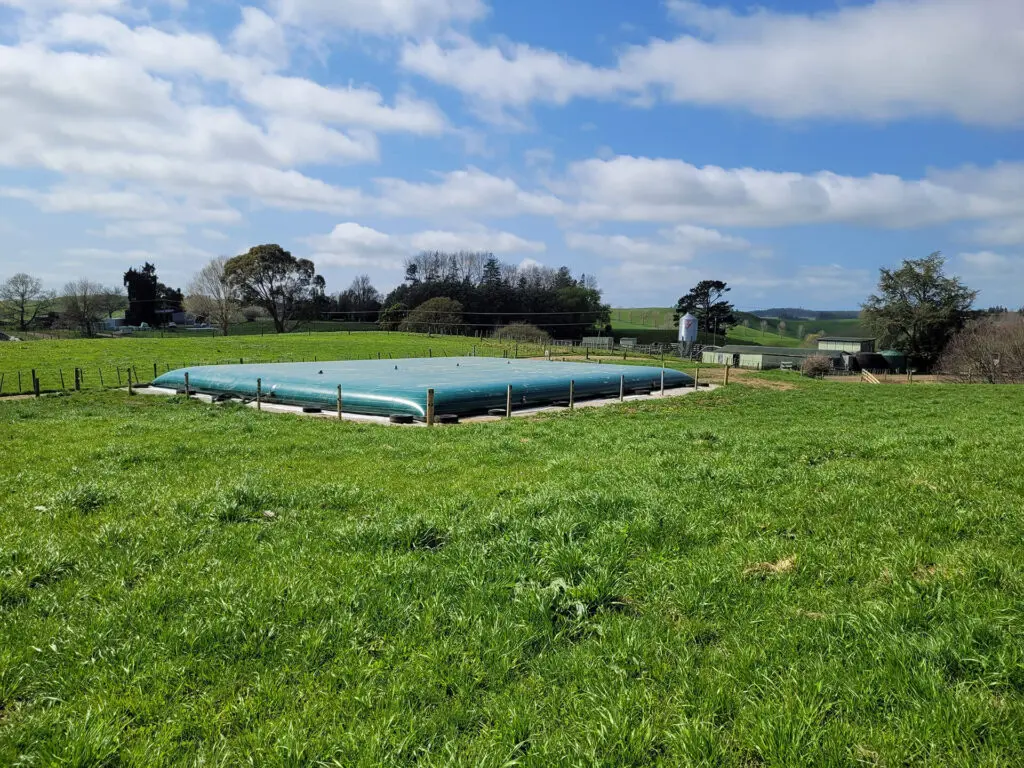
What kind of site do you have? Bladder tanks are easy to set up. You don’t need any special consents, as they’re technically considered temporary storage. All you need is a reasonably flat area.
If you’re collecting effluent in a sump, a 22,500-litre sump can be installed at a minimum of 10 metres from the cowshed, allowing effluent to be pumped to a bladder tank positioned a minimum of 45 metres away from the Cowshed.
Many farmers choose a bladder tank for deferred storage. We position the bladder above the sump, pump the effluent into it, then let gravity return it to the sump when it’s time to spread.
Versatility
One of the great features of a bladder tank is safety, you can’t fall in. They are also friendlier to have around as there is much less odour, so they are easier to locate if you are close to a road or have neighbours close by.
Effluent stored in a bladder tank is more nutrient-rich as it will not be diluted by rainwater or lost to evaporation.
It is still important to keep the solution mixed, as it is much more difficult to remove a build up of solids from an enclosed tank than a pond.
Efficiency
There are lots of reasons to invest in a bladder tank for your storage, it is very efficient use of your space. The tipping point is size. As size requirements increase, an HDPE-lined pond tends to be more cost-effective, a bigger farm will get better value from a pond. Having said that, your initial outlay for a bladder tank might be higher but the set-up cost is lower and at the end of the day, if you need to move, you can take your bladder tank with you.